Preventing urinary stone recurrence: water, not beer, and the evidence for 2.5–3 L a day
Hello, I’m Dr Shin Chan-wook, a urology specialist and director of Mediraum Clinic in Naeoe-dong, Gimhae. Today I would like to discuss daily measures that can reduce recurrence after urinary stone treatment. I will explain why I tell patients to drink enough water and how to put that advice into practice.
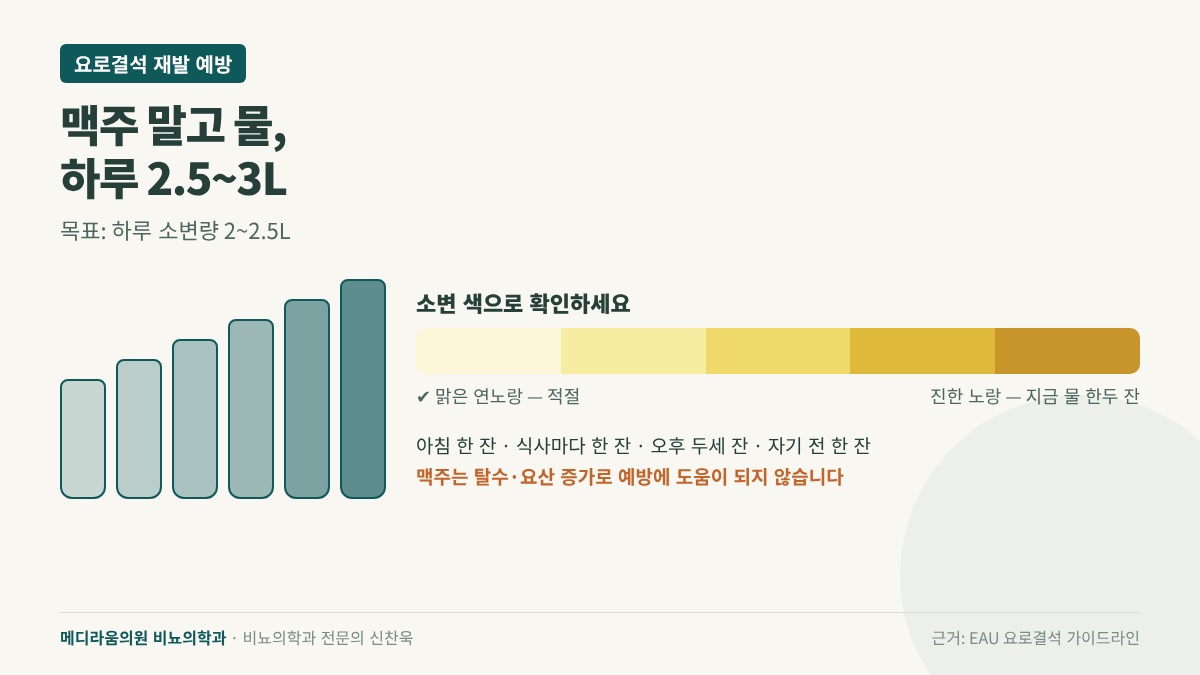
For preventing recurrence of urinary stones, including kidney and ureteral stones, there is one measure I ask patients to follow: drink water. The European Association of Urology (EAU) guideline recommends drinking 2.5–3 L a day to maintain a urine volume of 2–2.5 L. Beer cannot replace water.
Before asking, “What foods must I avoid?”
After stone treatment, the question I hear most often is, “What foods must I avoid?” Diet is commonly thought to be the key, but the foods to avoid differ according to the stone’s composition, and following several restrictions for life is difficult in practice. Rather than prescribing a complicated diet, I therefore ask patients to be consistent about one thing: water.
Why water comes first in preventing urinary stones
Stones form when substances in the urine, such as calcium, oxalate, and uric acid, become concentrated and crystallise. When concentrated salt water is boiled, salt crystals form at the bottom. Urine behaves similarly: crystals form more readily when it is concentrated and less readily when it is dilute. Keeping the urine dilute is more fundamental than avoiding any one food. Meta-analyses have also found that increasing fluid intake lowers the risk of stone recurrence.
Target: 2.5–3 L of water a day and pale-yellow urine
- Clear, pale-yellow urine generally indicates adequate hydration.
- If your urine is dark yellow, drink another glass or two of water now.
- Drink more to replace the additional fluid lost on days when you sweat heavily or exercise.
Practical tips for preventing urinary stones
- Drink one glass after waking, one with each meal, two or three during the afternoon, and one before bed.
- Use a 500 mL bottle and count how many bottles you empty each day.
- If waking to urinate at night is troublesome, drink more during the daytime instead of after the evening.
Does beer help a stone pass?
Beer is often assumed to help a stone pass because it makes you urinate more frequently, but the opposite can happen. Alcohol’s diuretic effect removes water from the body, and purines in beer can raise uric acid and increase the risk of uric-acid stones. Water should be the main drink used for stone prevention.
Stone analysis and medical treatment
I analyse the composition of a stone that has passed and prescribe medicine when indicated by the result. I will explain separately in a future article when and how to test after a recurrence. For treatment used to break a stone, see Why urinary stone treatment does not always start with surgery.
Frequently asked questions
How much water should I drink to prevent urinary stones?
The European Association of Urology guideline recommends drinking 2.5–3 L a day to maintain a urine volume of 2–2.5 L. Clear, pale-yellow urine generally indicates adequate hydration.
Does drinking beer help a urinary stone pass?
No. Alcohol removes water from the body, and purines in beer can increase the risk of uric-acid stones. Water is the foundation of prevention.
Must I follow a special diet to prevent urinary stones?
The foods to avoid differ according to the stone’s composition, and long-term restrictions can be difficult. I first recommend drinking enough water, then analyse the stone and use medicine if necessary.
Are there people who should not drink large amounts of water?
Yes. If you have been advised to restrict fluids because of kidney or heart disease, discuss your target intake with the clinician responsible for your care.
Related care: Urinary stone care
Related articles
- Sharp pain in the flank or lower abdomen
- What happens on the day of extracorporeal shock wave lithotripsy, and how long does it take?
Guidelines and references
- EAU Guidelines on Urolithiasis (2026)
- Wang Z et al. Meta-analysis of diet, fluid intake, and recurrent calcium stones (PubMed)
By Dr Shin Chan-wook, urology specialist at Mediraum Clinic, Naeoe-dong, Gimhae.
This article provides general health information. The tests and treatment you need depend on your symptoms and circumstances. Consult a clinician for an individual assessment.