Blood in your urine? Why you should get it checked even if it stops
Hello, I'm Dr Shin Chan-wook, a urology specialist at Mediraum Clinic in Naeoe-dong, Gimhae. Today I'd like to explain visible blood in the urine, known as hematuria. We'll look at why it's worth finding the cause even when the bleeding stops on its own, and which tests you may need.
If you see blood in your urine and it looks clear again the next day, the cause still needs checking. At our clinic, I start with basic tests for causes such as infection. For patients at higher risk, I may also examine the bladder with a cystoscope. If hematuria recurs, imaging such as ultrasound or CT helps assess the urinary tract.
“I was probably just tired”
It's easy to assume that everything is fine after one episode of red urine. If rusty water came out of your tap once and then ran clear, you would still check the pipes. In the same way, a urinary tract tumor such as bladder cancer can cause painless bleeding that stops and returns. Most cases have a treatable cause. Testing helps avoid missing conditions that benefit from early detection.
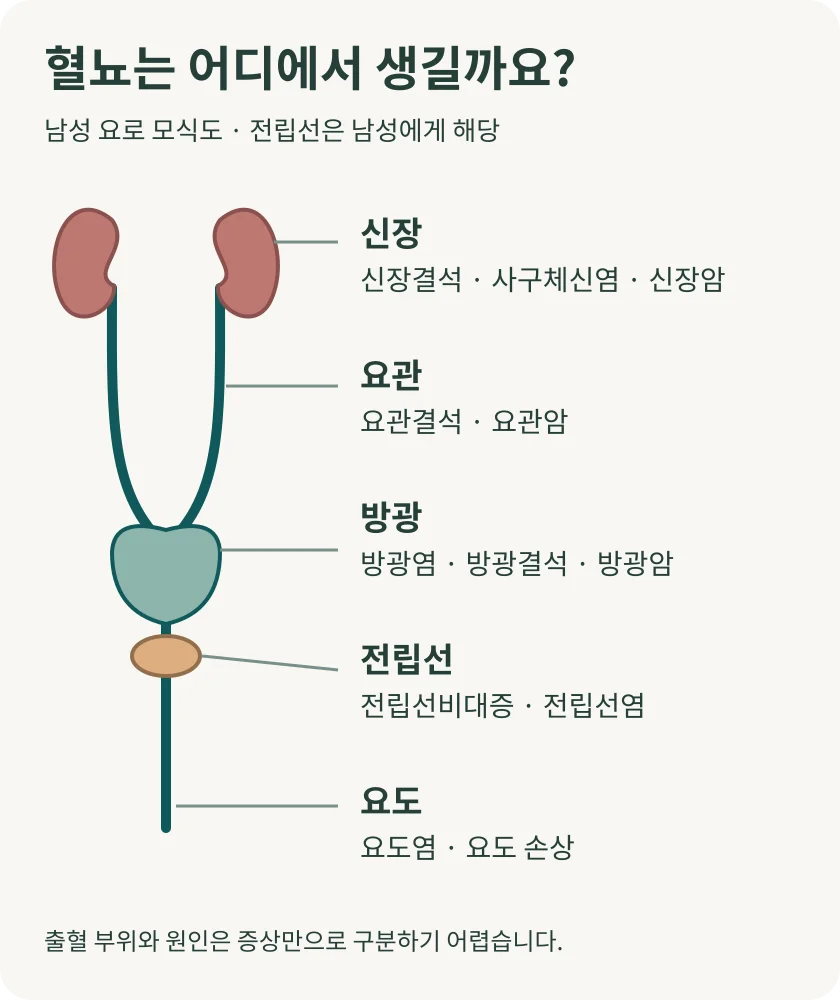
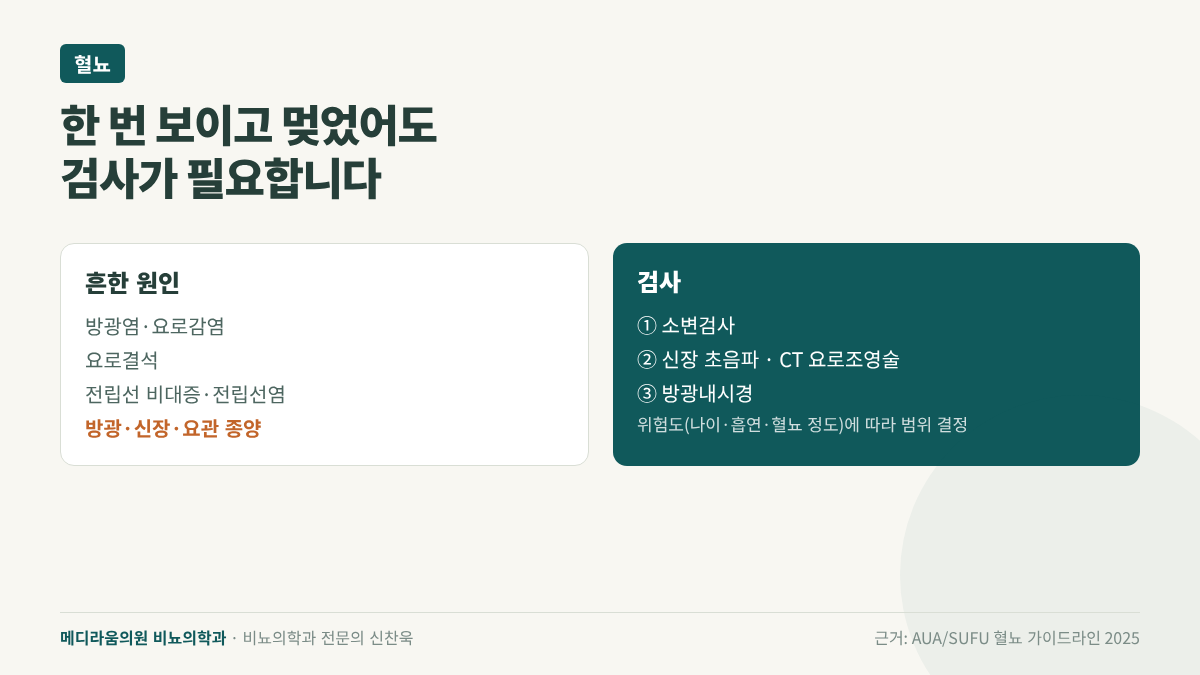
Common causes of hematuria
- Cystitis or another urinary tract infection
- Urinary stones
- Benign prostatic enlargement or prostatitis
- Strenuous exercise or injury
- Tumors of the bladder, kidney, or ureter
How we investigate hematuria
- For everyone — A urine test checks for red blood cells and signs of infection. If an infection caused the bleeding, we repeat the urine test after treatment to check that the blood has cleared.
- For people at higher risk — A cystoscopy lets us look directly inside the bladder.
- For people with recurring hematuria — Ultrasound or CT can assess the kidneys and ureters.
The 2025 AUA/SUFU guideline on microscopic hematuria uses risk factors including age, sex, smoking history, and the degree of hematuria to guide the workup. Cancer of the urinary tract is found more often in people with visible hematuria than in those whose hematuria can only be seen under a microscope, so visible bleeding warrants closer evaluation. At Mediraum Clinic in Naeoe-dong, Gimhae, we start with basic tests and explain which further tests you may need based on your results.
When to seek care promptly
- You currently smoke or have a long smoking history.
- You saw blood in your urine without pain.
- You pass blood clots or have difficulty passing urine.
Frequently asked questions
There was blood in my urine once and it stopped. Should I still see a doctor?
Yes. You should find out what caused it even if it stopped without treatment. Some tumors can cause painless bleeding, so arrange an initial evaluation.
My health check found traces of blood in my urine. What should I do?
We first check the finding again with a urine test. Any further testing depends on risk factors such as your age and smoking history.
Does everyone with hematuria need a cystoscopy?
Cystoscopy is used when indicated. We examine the bladder in people at higher risk because of factors such as age or smoking history, and in people who have had visible hematuria.
Does red urine always mean there's blood in it?
Foods such as beetroot and certain medicines can also make urine look red. A urine test can check whether blood is present.
Related care: Cystitis and bladder pain
Related articles
- Sharp flank or lower abdominal pain
- A weak urine stream and waking at night: benign prostatic enlargement
Guidelines and references
By Dr Shin Chan-wook, urology specialist at Mediraum Clinic, Naeoe-dong, Gimhae.
This article provides general health information. The tests and treatment you need depend on your symptoms and circumstances. Consult a clinician for an individual assessment.